22 min to read
Making Sense of Money
🏦 Simplify your finances. Decide exactly what you want. Determine the price you have to pay. Choose if you’re willing to pay it.

What I do with my money
My investment strategy is the classic boomer method. I want it to be simple enough that I can keep doing it when I’m busy with the rest of my life.
- Max out my Roth IRA. For 2026, the combined traditional and Roth IRA limit for someone under 50 is $7,500, subject to compensation and Roth income eligibility. Across 26 biweekly paychecks, that’s about $288.46 per check. At $300 a check, 25 checks get me there. For most people, the deadline for a 2026 contribution is Tax Day on April 15, 2027. If I’m still funding 2026 in early 2027, I select 2026 at the brokerage and divide what I have left by the paychecks before the deadline. Putting money into my Roth IRA fills the bucket. I still have to use the money in that bucket to buy the index fund I want. Until I place that order, the contribution can sit in cash or a money market fund, earning whatever yield is available. If I transfer $300 and stop there, I have $300 in my Roth IRA and zero new shares of my index fund. IRS contribution limits, IRS contribution-year guidance
- Get the full employer match in my 401(k) or 403(b). I check how much my employer will match and when I’ll be fully vested, meaning I get to keep 100% of their contributions even if I leave the job. Then I open the plan and check what my current balance and future contributions are actually invested in. If the plan offers a low-cost Vanguard institutional index fund that tracks the market I want, that’s my preference. If it doesn’t, I look for a comparable option. Plan defaults vary. Some put contributions in a target-date fund. The fund gradually shifts its mix toward bonds and other conservative holdings as the target year approaches. That can help someone who expects to draw on the money soon. I think it’s a stupid default for me. I want aggressive growth for as long as I can afford the swings, and I’d rather decide when to dial it back myself. Check the fund’s stock allocation over time and its expense ratio. Some charge more than a plain index fund, and fees vary even among funds with the same target year. If my balance is in a money market or other cash-like option, it’ll earn whatever that option currently yields and miss the stock market exposure I wanted. Department of Labor guidance on plan defaults
- Put long-term money into a taxable brokerage account. I buy an S&P 500 fund or a similar broad index fund. A brokerage account gives me flexibility about when I can use the money. It also means dividends and any gains I realize when I sell can create a tax bill.
- Keep $3,000 in a high-yield savings account. That’s my emergency cash target. Three thousand dollars is a number I chose for my life. If your rent alone would eat most of it, do your own math. I want emergency cash available without having to sell shares.
If I can’t fund every bucket, the bills and required debt payments come first. If I’m carrying credit card debt, paying it down comes before putting extra money into a brokerage account. If you get into credit card debt because you didn’t account for your cash flow and overspent, you’re stupid. And I don’t mean that lightly. It’s ignorant and irresponsible. An emergency is different. If you need to cover one and a credit card is the only financing you can get, I get it. My rule for ordinary spending is simple. If I couldn’t pay the statement in full every month, I couldn’t afford what I charged.
On payday I do almost everything manually. The pretax 403(b) contribution came out through payroll. Everything else, I move myself. I look at what came in, what’s due before the next paycheck, and what I can put toward the buckets. When I transfer money to the Roth, I make the fund purchase too. I probably care more about this than I should, but I sleep better knowing where I stand.
And if I’ve funded the buckets I care about and I have an extra thousand dollars? I’ll spend it on something nice. It’s ridiculous to FIRE your way through your entire life. Enjoy the wins. Be a little selfish. I’d rather spend money on something I actually want than pay an optional stupidity tax on a prediction market.
Why I paid off my student loans early
TL;DR. I refinanced $52,129.93 in private student loans at 7.73%, umpired day after day, and made my final payment on May 29, 2026. I paid off a 15-year loan in three years and four months, avoiding about $28,575 in projected interest. I maxed out my Roth IRA one year along the way. Paying off the loan was the bigger win.
I graduated in May 2022 and refinanced my private undergrad loans with Citizens on January 24, 2023. The new loan was scheduled to run until January 2038. I worked at CHOP, umpired day after day, and kept paying down the loan through the transition into my PhD. I was 25 when I sent the last $916.06. It took 1,221 days.
| Original 15-year schedule (estimated) | What I actually paid | |
|---|---|---|
| Principal | $52,129.93 | $52,129.93 |
| Interest | $36,086.16 | $7,510.82 |
| Total | $88,216.09 | $59,640.75 |
The scheduled payment works out to about $490 a month. I put in about $1,487 a month on average, or about $49 for every day the loan was open. That includes the extra payments. Once the balance hit zero, I was done with the required payment and could decide how much of the extra money I’d been throwing at the loan to save, invest, or spend.
Debt is like compounding in reverse. At 7.73%, every extra dollar I put toward principal was a dollar I could stop paying interest on. Had I made the scheduled payments, I’d have paid about $36,086 in interest. I paid about 21% of that. I still remember how good it felt to max out my Roth in the middle of all this. Seeing the loan balance hit zero felt even better.
What I buy and why
An S&P 500 index fund buys me a slice of hundreds of large U.S. companies. I can get that exposure through an ETF or a mutual fund. The first thing I look at is the index. A total U.S. market fund includes smaller companies as well. The S&P 500 covers large U.S. companies. The Dow Jones Industrial Average follows 30 large companies. The Nasdaq Composite follows Nasdaq-listed stocks, while the Nasdaq-100 covers large nonfinancial companies listed there. The Russell 2000 tracks smaller U.S. companies. I could see a use for any of those exposures. An S&P 500 or total U.S. market fund is simple enough for what I want. I haven’t done enough reading on global exposure to say whether I’d want to invest in other international stock markets. For now I’m keeping the core in the U.S. and accepting the concentration that comes with that choice. Buying three funds that all lean on the same big companies may give me very little additional diversification. I check what’s in the fund before I count it as something different.
Then I look at the expense ratio, or ER. At 0.05%, I’m paying about $5 a year for every $10,000 invested, assuming the balance stays the same. That’s a price I’m happy to pay to hold a portfolio I can buy in one transaction and leave alone. I also check whether I can automate purchases and whether the broker charges anything else. Once I’ve chosen a fund I understand, I have better things to do than check what it did this morning.
I’m young and I don’t give a shit what the market does this year, next year, or over the next ten or twenty years. I expect to be working and earning an income through all of it. If I needed the money next year, I’d care a hell of a lot. I’d give short-term Treasuries or savings more of a look for a bill with a deadline. For money I plan to leave alone for decades, I’d rather own U.S. stocks.
Japan’s Nikkei 225 took until February 2024 to surpass its December 1989 price-index peak. Thirty-four years is an awfully long time if you’re waiting to spend the money. That’s why I separate the money I might actually need from the money I can leave alone. Nikkei Indexes
What I expect from Social Security
I should have Social Security income when I retire. I’m pissed that I have to plan around how much of it will actually show up. The 2026 trustees project that the retirement and survivors trust fund will run through its reserves in the fourth quarter of 2032. If Congress leaves the law alone, incoming revenue would cover about 78% of scheduled benefits at that point. If you combine the retirement and disability funds on paper, the projection is 2034 with 83% payable. That’s a different calculation. 2026 Social Security Trustees Report
Social Security runs largely on taxes collected from people working today. The trustees project that the number of covered workers per beneficiary will fall from about 2.6 in 2025 to 2.3 in 2035. The 78% is a share of scheduled benefits at reserve depletion. It doesn’t tell me what I personally get back for every dollar I paid in or what Congress will do before I retire. SSA Fast Facts and Figures
I get to pay in for decades while the people in charge kick the problem down the road. Then I get to find out what they’ve decided my benefit is worth. It disgusts me. I’ll take whatever shows up, but I’m building the rest of my retirement plan without counting on the full check.
What three brokerages would do for me
Here’s where the brokerage plan actually stands. My Roth IRA is at Vanguard. The separate taxable brokerage accounts have only about $200 in them. I opened them years ago and keep a little money there because I want to keep the accounts around. I’d get a kick out of being a customer for fifty years. Maybe they’ll give a shit about loyalty by then. We’ll see. I don’t make enough right now to fund the three portfolios I’ve imagined.
Vanguard is the boring core. My Roth IRA is there, and that’s where I want my long-term S&P 500 or similar index exposure. You can open a Roth IRA at any major brokerage that offers one. I’d compare the funds, fees, and automatic investing options before I worried about the logo.
Fidelity would be for individual companies. I haven’t funded that part of the plan yet. If I do, I’ll start with the business. How does it make money? What does the cash flow look like? How much debt is it carrying? What am I paying for it? I might look at trading volume or how the price has moved before placing an order. I still need a reason to own the business. One bad pick in this account would matter more than one bad company inside an index.
Schwab would be for longer-term holdings that do something different. I might look at REITs or an income-oriented fund like JEPI or JEPQ. A REIT gives me property exposure. A fund that uses an options strategy to generate income makes a different trade, including potentially giving up some upside. I’d look at how the fund generates its distributions, what it holds, and what I’m paying for it before deciding it deserves a spot. I’m in no rush to fund a third idea while I’m still building the first one.
I already use Schwab for something else. When my fiancée and I went to Dublin, I used the Schwab Bank Investor Checking debit card to get cash. Dublin uses euros. Cross into Northern Ireland and you’re using pounds sterling. I put most purchases on my Chase Sapphire Reserve, which is my favorite travel card. The Schwab card was for when I wanted cash. Schwab charges no foreign transaction fees on that card and rebates eligible ATM cash-withdrawal fees. If the ATM offers to convert the charge to dollars, I choose the local currency. Schwab doesn’t rebate the ATM’s conversion fee. Schwab Investor Checking FAQ
I like having a relationship with more than one brokerage. It spreads out where I keep assets. The investments determine whether I’ve spread out the investment risk. SIPC generally covers up to $500,000 in missing securities and cash per qualifying capacity at a member brokerage, including a $250,000 cash limit. Basically, it addresses missing assets when a brokerage fails, but doesn’t cover your losses when your memecoin dissolves - that’s on you.
Build the pile before trying to live off it
I’m focused on building wealth now. Dividend income gets interesting to me when I have enough invested to pay for a meaningful part of my life. You can take a look at the Dividend Aristocrats to see what companies I’m talking about. At a 3% yield, it takes $2 million to generate $60,000 a year before taxes. At 2.5%, it takes $2.4 million. That’s what I mean when I say you need money to make money. The yield can change, and so can what $60,000 buys.
When I’m ready for that income, I’d rather buy a fund that tracks a dividend-growth index than build a dividend portfolio stock by stock. The S&P 500 Dividend Aristocrats index looks for companies in the S&P 500 that have raised their dividends for at least 25 consecutive years. I care more about the ability to keep raising the payout than about finding the highest yield on a screen. The streak tells me something about the company’s history. I’d still check what the fund owns, how concentrated it is, what it costs, and how much it overlaps with my other holdings.
I could pick the companies myself and decide exactly what to own and how much of it. Then I’d have to read the financials, keep up with the businesses, replace companies that cut their payouts, and decide what a sensible price is every time I buy. I’m happy to pay a modest expense ratio for a fund that applies the rules and does the rebalancing. I’d compare its total return as well as its distributions. A big payout is a pretty thin consolation if the shares keep losing value.
How I might make the switch
I haven’t decided how I’ll go from building the portfolio to living on it. I’d start by working out how much cash I actually need. I could tell myself I’ll sell growth holdings in a bull market and buy dividend funds in a bear market. As soon as I put it that way, I’ve given myself two markets to time. I know how I feel about that.
I might gradually direct new contributions toward a dividend fund when I’m closer to needing the income. That would let me build the position over time and see how much of my spending it could cover. If I did sell investments along the way, I’d have to look at the tax bill and what I’d be giving up.
I’m skeptical of planning to sell shares every year in retirement. I want to leave equity to my family. And if I have to sell to raise the same amount of cash after the market drops, I have to part with more shares. The conventional 4% rule starts with 4% of the opening balance and generally adjusts that dollar withdrawal for inflation in later years. Even understood that way, I’d rather build enough income to have a choice about when I sell. Dividends can be cut, so I’d still have to decide what I’d do if the income came up short.
What I’ll pay someone to do
I think a rock would do a better job than most financial advisers who charge you to pick stocks. Put the rock on your desk, buy a low-cost index fund, and get on with your life. The rock will leave your portfolio alone and charge you exactly nothing. An adviser charging 2% on $100,000 starts by taking $2,000 a year at that balance.
Take $100,000 over 30 years with no additional contributions. For illustration, assume a steady 7% nominal return before fees. If annual costs reduce that return by 0.05 percentage points, I end up with about $750,000. If they reduce it by 2 percentage points, I end up with about $432,000. Both amounts are before tax and inflation. The market won’t give me a steady 7%. The point is how much return someone would have to add before I come out ahead paying them.
I cannot imaging paying for a financial advisor. However, I’ll pay a tax adviser for a concrete answer if the value is there; for example, rolling over my CHOP 403(b) is exactly the kind of question I’d bring. Otherwise, I can buy an index fund myself.
When Uncle Sam gets his cut
You’re going to pay taxes on money. What I’m trying to decide is when Uncle Sam gets his grubby fingers on it.
My old CHOP 403(b) holds pretax money. In a traditional 401(k) or 403(b), pretax contributions generally reduce taxable income today, and withdrawals of those dollars and their earnings are generally taxable later. Some workplace plans offer a Roth option too. In my Roth IRA, I contribute money I’ve already paid tax on. I don’t pay tax on investment growth as it happens, and qualified withdrawals, including the earnings, are tax-free.
I’m considering a direct rollover from the CHOP plan into my Roth IRA. That’s a Roth conversion. The pretax amount I move gets added to my taxable income for that year. Moving the money to an eligible traditional IRA instead would generally keep it pretax. Leaving it at CHOP may also be an option if the plan allows it. IRS guidance on 403(b) rollovers
I’m a PhD student and I don’t make much right now. If my tax rate on the converted dollars is lower now than it would be when I draw the money later, paying the tax now could be a good deal. I’m penciling in about $2,000 for a full conversion, but that’s a rough estimate. I want to compare my federal and state tax bills with and without it using this year’s actual income.
A direct rollover lets the full amount I convert reach the Roth, so I’d set aside separate cash for the tax. If I take money out of the plan to cover the tax instead, that portion stays out of the Roth and may also face an early-distribution penalty. I’m leaning toward two partial conversions if the plan allows them. Splitting them across tax years could spread the bill and may change how much I owe. Splitting them inside the same calendar year would generally still put both amounts on the same return. If I need the converted money early, I’ll also check the separate five-year rules before touching it. IRS rollover guidance, IRS rules on IRA distributions
For now, I know what the next dollar should do. I fill the buckets I’ve committed to. I keep the investments boring. And if there’s money left over, I’ll spend it - probably on my fiancée.
Good financial books
| Cover | |||
|---|---|---|---|
 | 5 Steps to Retire in 5 Years | Jason Fieber | — |
| A Mathematician Plays The Stock Market | John Allen Paulos | 2007 | |
| A Non-Random Walk Down Wall Street | Andrew W. Lo & A. Craig MacKinlay | 2011 | |
| A Random Walk Down Wall Street The Time-Tested Strategy for Successful Investing (Twelfth Edition) | Burton G. Malkiel | 2018 | |
 | Beginners Guide to Dividend Investing 2020 | Matthew O. Jacobs | — |
| Butterfly Economics | Paul Ormerod | 2012 | |
| Credit Repair | Kris Chanatry | 2020 | |
| Credit Secrets | Dan Cardone | 2020 | |
 | Crush the Market | Tim Morris | — |
 | DAY TRADING IN THE 2020-2030 DECADE From Zero to Passive Income. Practical Guide for Newbies to Learn How to Trade Financial Markets (Forex, Cryptocurrency, ... Stocks, Options, Futures) in 11 Easy Steps | Dexter Wade | — |
 | Dividend Investing for Beginners & Dummies | Giovanni Rigters | — |
 | Dividend Investing for Everyone | Tim Morris | — |
| Investing For Dummies | Eric Tyson | 2017 | |
| Landlording on AutoPilot | Mike Butler | 2018 | |
 | Mastering Stocks Strategies for Day Trading, Options Trading, Dividend Investing and Making a Living From the Stock Market | Michael K Brown | — |
 | Nolo's Guide to Single-Member LLCs | David M. Steingold | — |
| — | One Up on Wall Street | Peter S. Lynch & John Rothchild | 1988 |
| Security Analysis Sixth Edition Foreword by Warren Buffett | Benjamin Graham & David Dodd | 2008 | |
| Stock Market Investing Bible | Zuckerman, Mark | — | |
| Tax-Free Wealth | Tom Wheelwright | 2018 | |
| The Bitcoin Standard | Saifedean Ammous | 2018 | |
 | The Case for Dividend Growth | David L. Bahnsen | — |
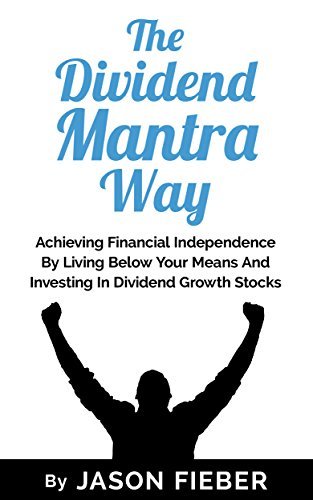 | The Dividend Mantra Way Achieving Financial Independence by Living Below Your Means and Investing in Dividend Growth Stocks | Jason Fieber | — |
| — | The Intelligent Investor | Benjamin Graham, Warren E. Buffett & Jason Zweig | 2012 |
 | The Next Millionaire Next Door Enduring Strategies for Building Wealth | Thomas J. Stanley | — |
| The Personal MBA 10th Anniversary Edition | Josh Kaufman | 2020 | |
 | The Simple Path to Wealth Your Road Map to Financial Independence and a Rich, Free Life | JL Collins | — |
 | The Single Best Investment Creating Wealth with Dividend Growth | Lowell Miller | — |
| Warren Buffett and the Interpretation of Financial Statements | Mary Buffett & David Clark | 2011 | |
| Your Money or Your Life | Vicki Robin & Joe Dominguez | 2008 |