8 min to read
What Doing a PhD Is Teaching Me About Myself
📖 On progress, distraction, and having enough of myself left at the end.
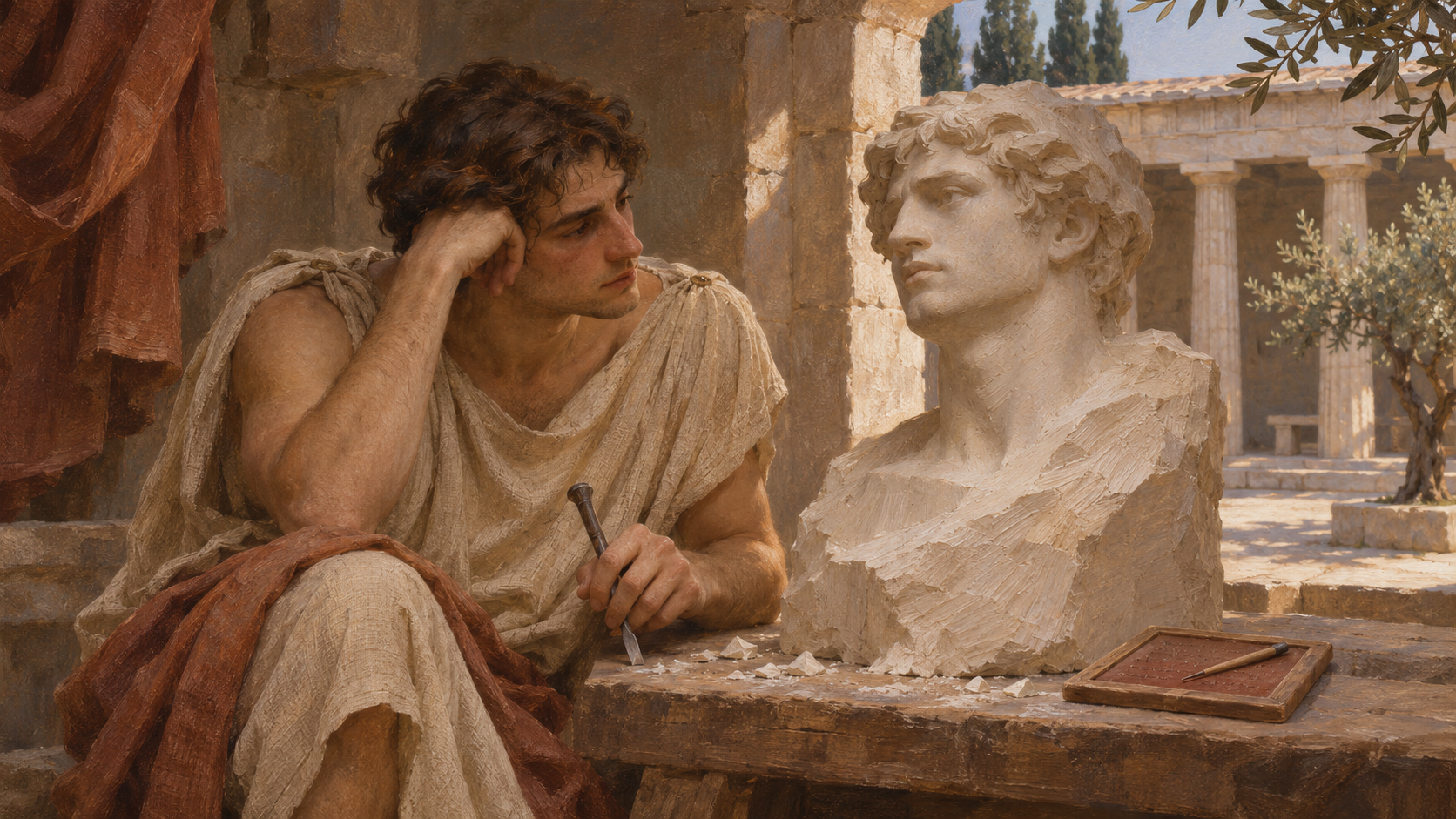
In my earlier post, What 50 Books Taught Me About Doing a PhD, I wrote about the lessons I found in other people’s advice: accepting uncertainty, writing consistently, managing expectations, and learning how to conduct independent research.
This is more of a personal follow-up. These are the things I am still working on putting into practice, even after reading enough to recognize them.
Knowing what to do does not make doing it easy. In fact, self-awareness does not absolve you of anything; it makes you more critical of yourself. Sometimes it makes the distance between the two more frustrating because you’re comparing yourself to where you think you ought to be.
One of my biggest difficulties is sacrificing perfection for expediency. I can spend too long trying to understand every detail, anticipate every objection, or find the best possible way to proceed. There is always another paper to read, another possibility to consider, another improvement to make. But at the same time, things shouldn’t be arbitrarily rushed if afforded the time and space to work.
I care about doing things properly, not so much about perfection. I need to recognize the optimal point when that care stops helping me finish. An imperfect piece of work gives me something to examine and improve. Something that exists only in my head can remain promising indefinitely. That’s why I write here - to put my thoughts to text that I can revisit and recalibrate against while progressing forward into the future.
And amidst unstoppable expediency, I still need enough space to think. That is a tension I have not resolved.
Everything feels accelerated. Cal Newport admonished this well-before AI. We operate within a hyperactive hivemind: Read faster. Respond sooner. Produce more. Now we employ AI to close the gap. But I cannot always understand something at the speed at which it can be explained to me. I need time to grapple with an idea, get confused, try an explanation, discover where it fails, and work through it again. That’s just the nature of who I am, and I’ve accepted that. To be honest with myself, I don’t think this is a matter of something that is changeable. I shouldn’t force myself into being something that I just am not.
I can get answers well before I have properly understood the question, and when this is the case, the answers just don’t stick.
With AI, that gap becomes especially easy for me to overlook. I can move through a conversation and come away with pages of articulate explanations while still being unable to reconstruct the reasoning myself. If I keep moving, I may never notice exactly where my understanding stopped.
I need to protect time for that slower work. Otherwise, I risk becoming increasingly efficient at moving past things I have not learned.
Protecting that time requires more discipline about distractions than I would like. Some distractions are obvious. Others arrive as reasonable requests, interesting conversations, small obligations, or useful things I could quickly take care of. Individually, these seem harmless. Collectively, they can consume the day.
You would think that since I neither have nor participate in social media, I would have copious amounts of time. But the reality is that I still feel stretched thin. I think it’s because I get so immersed and engrossed in things that might seem trivial from an outsider’s perspective, but are deeply fulfilling and rewarding to me. They pass the time, but they also lead to discoveries about myself. I go down a rabbit hole and come back with new lines of thinking, new questions, or a deeper understanding of something. More often than not, I get something out of it.
With social media, I often felt disoriented afterward, without any clear, actionable takeaways. There were so many competing things hijacking my attention that I could never stay immersed in any single topic, idea, or subject long enough to work through it.
I need to say no more often. I need to be realistic about how much time I have, and more willing to end a conversation when I need to return to work. I find that uncomfortable. But agreeing to something does not create the time or attention it requires. That time comes from somewhere.
The pattern I most want to avoid is being completely occupied without being able to identify what I have accomplished.
A day can be full from beginning to end. I can answer messages, attend meetings, read fragments of papers, handle errands, solve small problems, and keep dozens of things moving. By evening, my physical energy is gone and my mental bandwidth is saturated.
Then comes the question:
What did I actually do?
Sometimes I struggle to remember. Sometimes I remember everything, but none of it moved the work that mattered.
That combination is miserable: feeling depleted while also feeling behind. Repeated often enough, it makes me question my effort, my ability, and whether I am making any progress at all.
The resolution: I need something concrete to measure against.
That does not mean every day needs a breakthrough. A paragraph that states the argument more clearly counts. So does an analysis I can reproduce, a documented decision, or an explanation of why an approach failed. Even identifying precisely what I do not understand gives me somewhere to begin tomorrow.
Small, measurable wins help me stay consistent because they leave evidence. When the larger project feels stalled, I can look back and see what has changed.
I have already been doing this by having a PhD repo. Where I git-track my thinking. For example, I might say X protein does Y thing. Then a week later, after reading more research articles, that claim becomes more nuanced and mechanistic under Z conditions. In effect, this repo gradually documents my learning and understanding. I suppose this is what writing already does, but this is a more standardized way of getting at this process. As I write these words, it seems simple to me, but when scaled, this process is profoundly simple yet so elegant.
Being able to explain that progress is another useful check. What did I try? What happened? What do I now understand? What remains unresolved? I want to be able to answer those questions for myself, even when nobody else asks.
There is also a harder question beneath all of these practical adjustments: is this worth what it is taking?
I do not think an honest reflection should skip that question or resolve it too quickly.
There are times when the experience feels like being taken apart while ordinary life continues around me. Responsibilities remain. Expectations remain. Somehow, I am supposed to rebuild my confidence and keep producing at the same time.
It is especially difficult when the standards I am failing to meet are my own. They are the same standards that helped me get this far in my life. Being disciplined, prepared, capable, and dependable used to give me a clearer sense of where I stood. Now I can put in substantial effort and still feel unable to meet expectations I once considered basic.
I understand the argument that doctoral work requires adaptation. Living through that adaptation can feel much less orderly than the word suggests.
I am reluctant to call every low point growth. Many experiences leave me exhausted and less able to work. I do not want to romanticize that simply because I hope to emerge with a degree.
I have also become more selective about involving other people.
When something already feels difficult and fragile, another person’s involvement can introduce more uncertainty: different priorities, misunderstandings, delays, or commitments that turn out to mean less than I thought they did.
My instinct is often to do as much as possible myself. At least then I understand the decisions and know what has been done. But taking everything on myself has a cost, too. I need to be careful about whom I depend on, and specific about what I am asking them to do. Trust needs a basis beyond someone sounding willing or confident.
The same selectivity applies to talking about the PhD. There’s no point in drawing comparisons to other realms of research because its just so totally different from your own, on an explicit level.
Nobody else lives inside this project the way I do. They do not carry every unresolved question or understand why a seemingly minor setback can occupy so much of my attention. Explaining all of that takes energy, and explaining it repeatedly does not necessarily make me feel better understood.
I am learning to share more tactfully: when I need advice, when someone can help, or when I have something I want to communicate. I do not need to give everyone a running account of the struggle. But do speak up when it is important:
“If you are silent about your pain, they’ll kill you and say you enjoyed it.” ― Zora Neale Hurston
I do not want to mistake needing support for having failed at independence.
For now, these observations give me a few things to practice: finish work before perfection becomes another delay; protect enough uninterrupted time to understand it; say no when my capacity is already spoken for; and leave a record of progress I can recognize tomorrow.
I still want to do work I am proud of. I want to be able to explain it, stand behind it, and see how I arrived there.
I want to have enough of myself left to enjoy it when I get there.